
How to Mop a Floor Smarter with Tips That Work
Ever mopped your floor and found it looks dirtier than before? You’re not alone, and it’s rarely down to bad technique. Most of the time, it comes down to a grubby mop, too much water, or a heavy hand with the cleaner. Here’s how to mop a floor without leaving stubborn marks: give it a sweep first, then work in small sections with a damp mop and a mild cleaner. Leave it to dry fully before anyone steps on it.
The 9 steps below cover hardwood, laminate, concrete, tile and vinyl. You will also get the right mop for each floor and a fix for sticky patches and funny smells. Need a deeper clean than a mop can give? Our London cleaning service team is on hand to help.
Step-By-Step Guide For How To Mop A Floor
Here’s how to mop a floor step by step that will keep it shiny and clean for a longer time.
Step 1. Check Your Floor Type
Firstly, you have to see what type of material your floor is made of. The floor can be a tile surface, stone, marble, hardwood, etc. Your floor surface decides which type of mopping tools and detergents you can use for cleaning the floor.
Step 2. Pick the Right Mop
You have to decide which type of mop is right for your floor cleaning. The common types of mops are traditional sponge mops, string mops, and strip mops. These are used for specific floors, such as sponges for uneven surfaces and string mops that are most commonly used in commercial areas. Strip mops are also used most commonly as household mops.
Step 3. Clear and Sweep the Floor
But before starting to mop the floor, prepare the surface for cleaning. Set aside all furniture in a separate room, and try to remove enough furniture, not just chairs and tables.
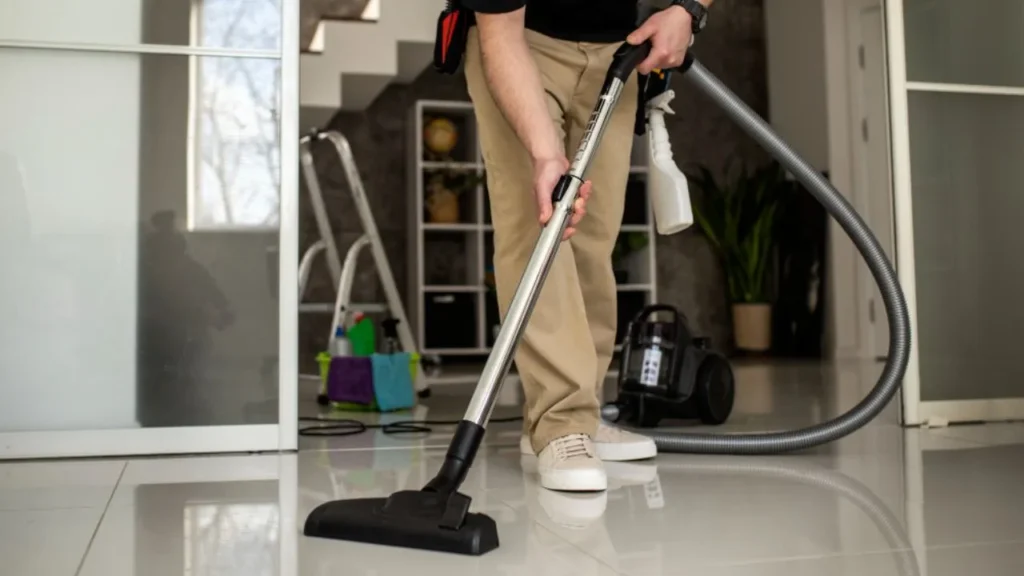
You will see some debris on the floor that you have to pick up by hand or using a vacuum first because a mop can only push the rubbish, not pick it up. The best approach is to broom the floor because, in this way, all dirt and debris will be removed, and you will have to put in less effort for mopping.
Step 4. Mix Your Cleaning Solution
Now you have cleaned the floor using the sweep-away process. Next is mopping, so choose a cleaning solution based on your floor surface type. Mix a small amount of washing-up liquid, white vinegar, apple cider vinegar, a pH-neutral floor cleaner, or a similar product into warm water, and avoid bleach and ammonia unless your floor is tile or vinyl.
Before using, check the label to find the right dilution. After mixing it, stir in the bucket gently so it does not form foam. Always try to use less cleanser than you think you need because too much leaves a sticky film, and that is what causes streaks.
Step 5. Dip & lift the mop from the cleaning solution
Take the suitable mop according to your floor type and dip it in the cleaning solution. The bucket should be filled with enough cleaning solution that the mop easily gets wet. If your mop is partially stiff, then dip it again until it soaks up enough solution.
When completely soaked in solution, lift the mop slightly in the bucket and keep hanging it for two to three seconds until all the extra solution drips off. If it is in excess, then wring it by hand.
Step 6. Mop Section by Section
To collect the debris, mop the floor in every section, and for this use, these are the methods for mopping
- Use them in the S-curve that works well in the small section and covers the whole patch with little overlap.
- Then swing the mop in the shape of a figure eight because in this way textured floors and grout lines clean easily.
- Mop with grains on the hardwood, and this willstop dirt settling into the gaps and leave fewer marks.
- Use the back-and-forth technique of mopping on smooth tile and vinyl floors.
The important tip is to start in the far corner and mop towards the door so you never step on the wet floor.
Step 7. Rinse and Wring as You Go
After every few sections, dip the mop in the cleaning solution bucket and swirl it around to shake off the dirt. Then wring it out well before you go back to the floor. The mop should be slightly damp, not dripping, because a soaked mop leaves puddles and streaks on the floor and can damage the wood floor.
When you feel the cleaning solution is going to be grey or cloudy, then change it, meaning make a new solution. Because the dirty cleanser will only leave the dirt.
A useful tip for you is to use two buckets: in one, fill the complete cleaning solution, and in the second bucket, rinse the mop with a hand wringer.
Step 8. Let the Floor Dry
Now you have done the mopping, and the floor looks shiny and clean. Open the window or use a fan to dry the floor and keep the pets and people out of reach of the cleaned floor until it is completely dry. If you see the damp patches, then take a dry mop towel straight away.
Step 9. Clean and Dry Your Mop
Spill the water from the bucket, wash it with tap water, and keep it safe in your cleaning tool sections. Take the dirty mop and put it under hot water and rinse it after washing until you do not see any dirt on it.
Then hang the mop and towel in the sunlight because if you keep them without drying, then mould growth chances increase.
What You Need to Mop a Floor?
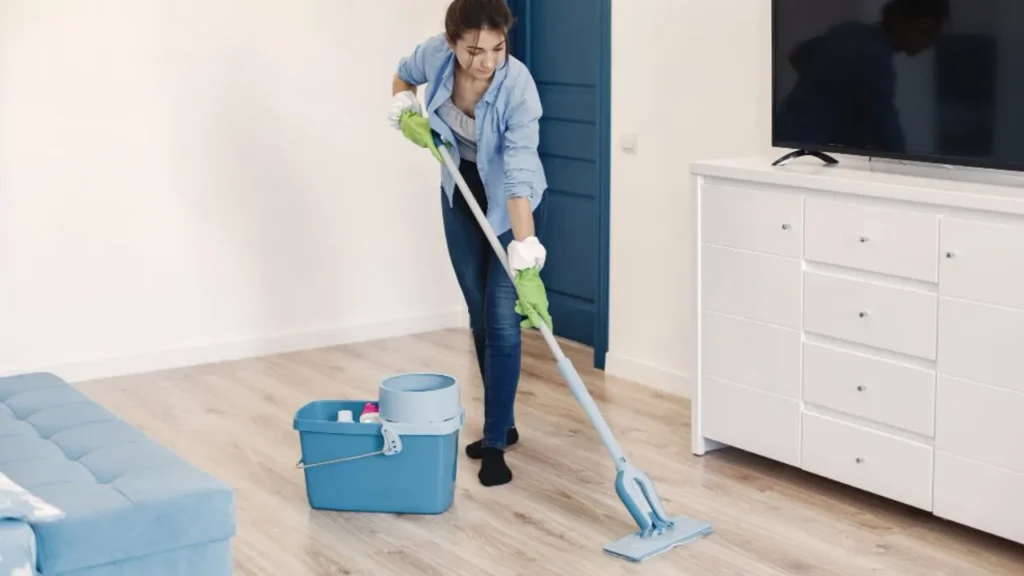
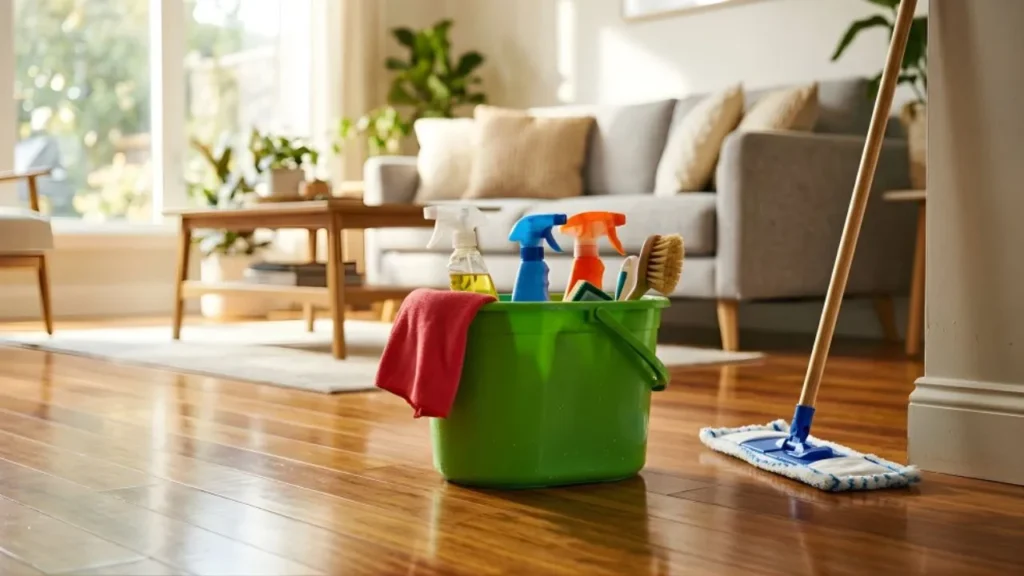
Before learning how to mop a floor, check the list of the right tools and cleaning products. You need a mop, a bucket, a floor cleaner, and warm water. A broom or vacuum helps too, as you should always clear loose dirt first.
Mopping Tools
- Mops can be string, flat microfibre, or spin mop; choose the one that suits your floor.
- Buckets that are large enough for a mop can be easily dipped.
- A broom or vacuum to pick up the dust and crumbs before mopping the floor.
- A Sprite mop head: if one gets too dirty, then you can easily replace it and use the new one.
- Dry cloth or towel for cleaning the remaining wet patches off the floor.
Cleaning Solutions
Mix a small amount of washing-up liquid, white vinegar, apple cider vinegar, a pH-neutral floor cleaner, or a similar product into warm water. Avoid bleach and ammonia unless your floor is tile or vinyl.
Use less cleaner than you think you need, as too much leaves a sticky film. Check the label for the right dilution. Never mix bleach with other cleaning products, as this can create toxic fumes.
How to Clean the Floor With Different Types of Mops?
You can choose a mop according to your floor for mopping. So the common household items are given here:
Mop With a String Mop
Take the string mop head and dip it in the bucket and wring it out well. Then use the M-pin S curve or figure eight from the last corner of the room. This holds more water, so wring it twice.
Best for: Tile, stone, concrete and sealed vinyl floors.
Mop With a Flat Cloth Mop
A clean microfibre pad take and dampen it completely and mop on the floor. You have to wring it until it feels damp totally. You can push it in straight lines or an S shape and flip the pad when it turns dirty. It holds less water, so it is the safest to use.
Best for: Hardwood, laminate, tile, and vinyl floors.
Mop With a Steam Mop
If you are mopping with a steam mop, then for this, fill the tank with clean water and plug it in. When it heats up, place it in straight lines, and do not keep it in one place, as it can damage the floor. Read its manual for cleaning, but most steam mops do not use the cleaner.
Best for: Sealed tile and vinyl.
Mop With a Sponge Mop
Take the sponge in your cleaning solution and squeeze the extra water with the built-in lever. Push it in overlapping strokes instead of an S curve. After cleaning, rinse the sponge because it picks up most of the dirt.
Best for: Use on the smooth tile and vinyl but not on the textured floor.
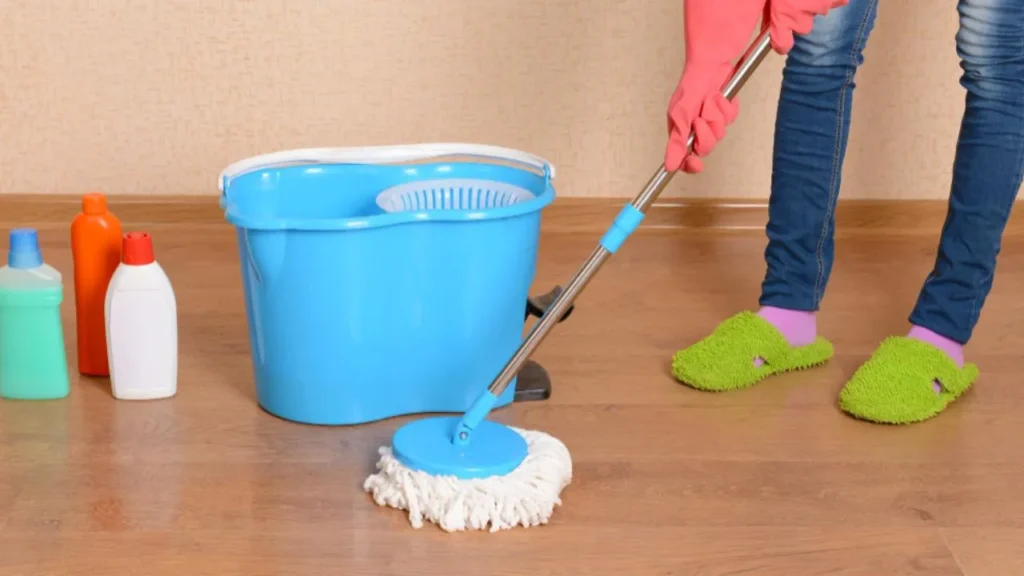
Mop With a Spin Mop
Fill the bucket with your cleaning solution and dip the mop head in. Place it in the spin basket and press the pedal to wring it out. The head stays damp, so the floor never gets soaked. Mop in an S-curve, starting from the far corner.
Best for: hardwood, laminate, tile, and vinyl.
Mop With a Spray Mop
For mopping with a spray mop, you have to fill the built-in bottle with your cleaning solution and fit a clean pad, then press the trigger to spray a small patch of floor. Then wipe it and swap the pad when it gets dirty. For daily touch-ups, a spray mop is a good choice.
Best for: Hardwood, laminate, and sealed floors.
How to Mop Different Types of Floors?
Here is a complete breakdown of how to mop different types of floors.
Hardwood Floors
You have to check the coating on your floor first and then put a few drops of water on it. If the water beads up, the floor is sealed and can take a damp mop. For sealed hardwood, vacuum first, then use a flat microfibre mop and a cleaner made for it. You have to dry each section before you move on to the next. For cleaning the wax or oil finishes, use only a specialist cleaner on a barely damp cloth.
Laminate Floors
For mopping the laminate floor, do not use the soaked mop. Use a damp mop, but before sweeping the floor, use lukewarm water with a small amount of pH-neutral cleaner.
You have to wring the mop until it is just damp, move in the direction of the boards, and change the water when it turns dirty. A useful tip for laminate floors is not to use the steam mop on it and to avoid wax and oil soaps.
Concrete Floors
The concrete floor is most commonly mopped with a mixture of warm water with a mild detergent. For this, a well-wrung cotton or microfibre mop is best to use. You can clean the tough stains by scrubbing gently with a soft nylon brush. After mopping, rinse it with clean water to remove the detergent residue, and then let it air dry.
Tile and Vinyl Floors
The floors that are made of tile and vinyl take more water than the wood, so the cleaner stays. As usual, you have to sweep or vacuum the floor and then mop with a microfibre or string mop in a C-shape. Do not use the bleach and ammonia detergent, as these damage the surface, and rinse the mop often and wipe the floor but dry it to avoid the water marks on it.
How Often Should You Mop Your Floor?
You can mop your floor once a week as a general rule, but the busy area floor needs to be cleaned more frequently. Such as the kitchen and hallways near the front door, which need to be mopped 3 to 4 times a week. The bathroom floor requires to be mopped once or twice a week, but it’s not a hard or fast rule. If you have kids or pets at home, then you have to mop almost daily.
Common Mopping Mistakes You Should Avoid
There are some of the most common mistakes that people make during or after the mopping process given here:
- When you use a fully soaked mop on the hardwood and laminate floor, it can make the boards swell and warp, so wring the mop until it is only damp.
- Do not mop the floor without a broom because dirt will collect with it and mopping will not give any benefit.
- Change the cleaning solution when you feel it is dirty and not enough for mopping.
- Leaving a damp mop on the floor will cause mould to grow and create a bad smell.
- Do not walk on the wet floor because it leaves footprints and can cause slips, so start at the far corner and mop towards the door.
- Choose the cleanser carefully because a wrong selection can destroy your floor.
How to Fix Sticky Floors and Bad Smells After Mopping?
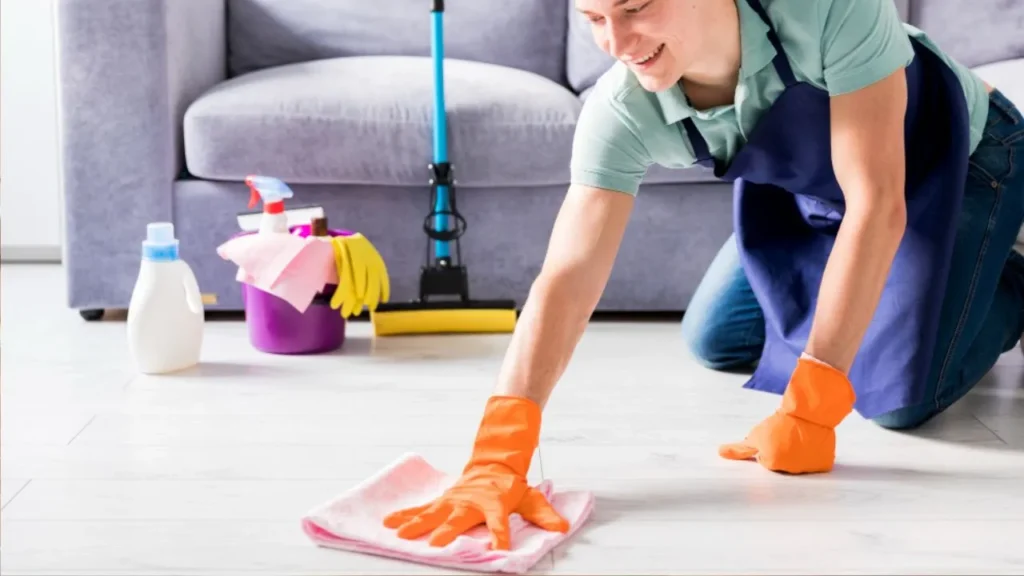
If you feel the floor is still sticky after mopping, then you have to simply soak the mop with plain water, not the cleanser, and mop the floor. This time the sticky film will be cleaned completely and dry the floor with a clean microfibre cloth. In case the stain is thick, then rub it gently with a damp cloth, soaking it with white vinegar.
If the floor smells musty, then the simple reason is the dampness. For this, open the window or switch on the fan and try to dry it with a towel. But if the smell is coming from the mop, then soak its head for 15 minutes in warm water with a cup of white vinegar. After this, wash it and keep it to dry in the sunlight.
Conclusion
Knowing how to mop a floor properly comes down to three basic steps. Sweep the floor, use a damp mop with the right cleaner, and let the floor dry fully. Always choose the mop and cleaning solution that match your floor type. If you are short on time or want a deeper clean, a domestic cleaning service we provide that can take care of the mopping for you.
Frequently Asked Questions
You should use warm water because it cleans the stains easily and is safe for most floors. Hot water is not good to use because it can damage the floors, especially hardwood and laminate floors.