
How to Clean a Bathtub the Safe Way, From Limescale To Yellowing
You scrub until your arms ache, and the bath still looks yellowish. Cleaning a bathtub without scratching its surface requires patience, not force. Clear the plughole first, use diluted washing-up liquid, let it sit for 10 to 15 minutes to loosen the dirt, then rinse and dry.
Scouring can leave tiny scratches that trap the soap scum you were trying to remove. This guide gives bathtub cleaning tips for acrylic, enamel, and stone resin, from routine upkeep to stubborn stains.
How to Clean a Bathtub in 7 Simple Steps
The best way to clean the bathtub is to do it gently. Use a mild detergent and a soft sponge, and take your time. Every step below uses soft tools and nothing stronger than washing-up liquid. Stronger products can scratch, strip, or etch some materials, which is why they come later.
Use Kit:
You’ll need:
- Soft sponge or soft-bristled brush
- Spray bottle
- Microfibre cloth
- Rubber gloves
- Washing-up liquid
- Old toothbrush
- Mesh drain catcher
Step 1: Clear the Bath and Open a Window
Lift all bottles, toys, and mats out of the tub. Bottles left on the edge trap moisture and dirt underneath. Ventilate by opening a window and switch on the extractor fan. Wear gloves because even a mild cleanser can irritate your skin. Clean the mat separately, including its suction cups, where mould often hides.
Step 2: Clear the Plughole and Overflow
To clean a bathtub drain, remove the click-clack or pop-up plug and pull out any hair. Clean inside the overflow hole using a bottle brush or an old toothbrush, as soap film in this area can give off an odor. Pour hot water into the plughole and overflow hole, and then place a mesh drain catcher.
Step 3: Choose a Cleaner That’s Safe for Your Bath
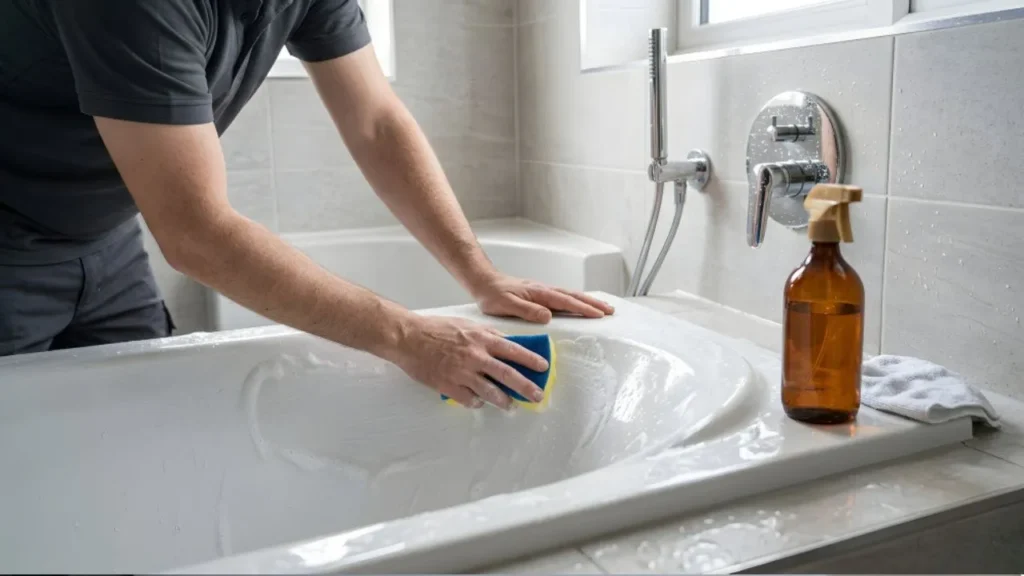
Fill a spray bottle with warm water and a little washing-up liquid, then apply it to the entire bath. A mixture of washing-up liquid is suitable for most bath surfaces.
Safety: Never use bleach with vinegar or acidic limescale remover. UK government guidelines on toxicology warn that a mixture of bleach and acid produces chlorine gas, which can irritate the throat and lungs. Rinse the bath after using different cleaning products.
Step 4: Wet the Bath, Apply, and Leave for 10 to 15 Minutes
Dwell time is what lifts soap scum and body oils, so resist the urge to scrub early. Cleaner slides off steep sides, so lay cloths or kitchen roll soaked in the mixture against them. Use the wait time to wipe the taps and surrounding tiles.
Step 5: Scrub From the Rim Down
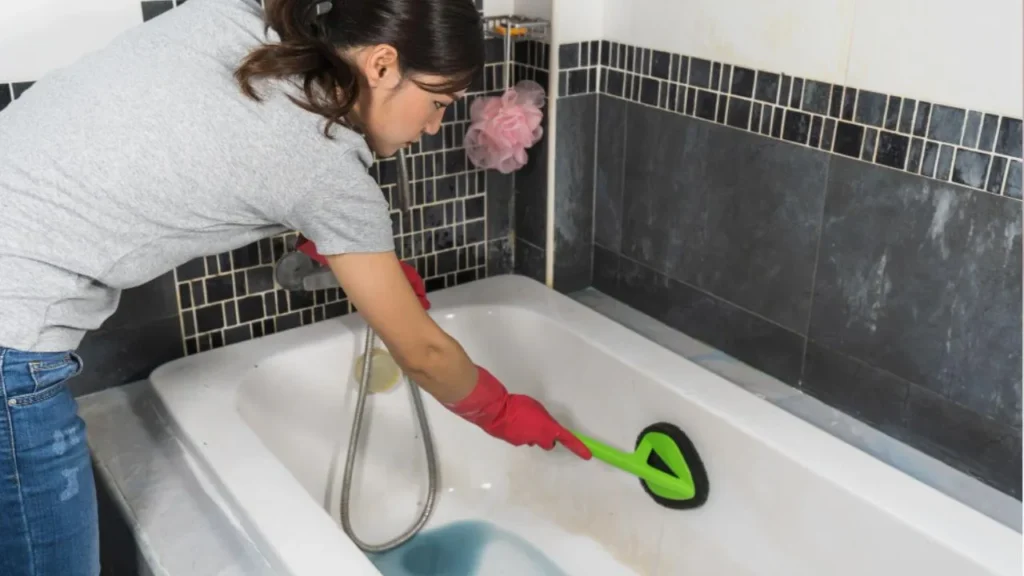
Start with the rim and edge, and then work down towards the bottom. All dirt runs down, so you clean the base last. Use a sponge or soft-bristled brush for cleaning that easily moves under the taps and in the corners, where grime gathers.
On a textured non-slip base, scrub in different directions rather than in a circular direction because grime gets stuck in the grooves. Two bathtub cleaning tips to spare your back and knees: a long-handled brush and a knee pad.
Step 6: Rinse Until No Residue Is Left
Rinse thoroughly with warm water from a jug or detachable shower head until all the suds disappear. Residual cleaner attracts dirt and makes the tub slippery. Rinsing is important, especially when bathing babies and bathing every day, because the residual cleaner comes into contact with the skin.
Step 7: Dry the Bath, Taps, and Sealant
Dry the bath with a microfibre cloth to avoid hard-water spots. Rub down the tap using a dry cloth for a clean finish. Dry the sealant along the edge as well, because damp sealant encourages mould.
How Do You Clean Acrylic, Enamel, and Stone Resin Bathtubs?
Acrylic, enamel, and stone resin baths should be cleaned using washing-up liquid, hot water, and a soft sponge. The type of cleaning agent depends on the material because acrylic can scratch, enamel can chip, and stone resin is sensitive to acids.
How Do You Clean an Acrylic Bathtub?
To clean an acrylic bath, use a soft sponge with a mild liquid cleaner. Abrasive cleaners, including gritty creams, scourers, and magic erasers, act like sandpaper and can scratch the surface. Some acrylic baths can be damaged by bleach, so avoid it unless recommended by the manufacturer.
For a ready-made solution, choose a product that specifies baths on its label, for example, Zoflora Power Bathroom Cleaner. As recommended on the Zoflora label, test an unseen area first.
How Do You Clean an Enamel or Cast Iron Bathtub?
To clean an enamel or cast iron bathtub, use a soft cloth and mild cleaner, being careful around the chips. Chipped areas around the feet and overflow can expose the metal underneath. Old enamel becomes porous and stains easily.
Acids may damage the older enamel, and the label of the Viakal Classic product excludes coloured, old, or damaged enamel. For a good enamel surface, the Cif Power & Shine Bathroom Spray has enamel on its list of appropriate surfaces. Resprayed bathtubs have a different coating, which bleach or harsh cleaners can remove.
How Do You Clean a Stone Resin Bathtub?
For a stone resin bathtub, you need a pH-neutral cleanser and a soft cloth without any acids. Vinegar and most types of limescale removers are acidic, hence not to be used. Acids attack natural stones; therefore, natural stone bathtubs require acid-free cleaning.
How Do You Remove Stains From a Bathtub?
To remove stains from a bathtub, select the right product for the stain. Washing-up liquid shifts grime, a limescale remover tackles chalky marks, and a rust remover clears orange drips. If you can’t tell what a mark is, start with the mildest product and work up. Check that every product suits your bath type first.
| Stain | Likely cause | What to try first |
| Grey grime or a tidemark | Body oil, soap and hard water | Washing-up liquid left for 15 to 30 minutes, then a soft sponge |
| Bath bomb or dye mark | Colouring that clings to the surface | Warm soapy water straight away; for set marks, a cleaner approved for your bath type |
| Nail varnish | Spills while painting nails | Let it dry and peel it off gently; never use nail remover on acrylic |
| Bath crayons or paints | Pigment left to dry on surface | Warm soapy water and a soft cloth while the colour is still fresh |
| Orange or brown drips under the taps | Iron in water from a dripping tap | Fix the drip, then use a rust remover approved for your bath type |
How Do You Remove Limescale From a Bath?
Get rid of limescale in the bath using an acidic limescale remover, or diluted white vinegar in case your bath can withstand acids. Thames Water says all the water it supplies is hard because it goes through chalky limestone. Hard water is the reason why scale builds up so quickly on London baths and taps. Bleach won’t help, since it can only lighten the staining on top of the scale. Sprayed on its own, vinegar runs off the sides before it can dissolve anything, so hold it in place:
- Soak the kitchen roll sheets in the vinegar or limescale remover.
- Press the sheets against the scale.
- Leave the sheets for two hours or as recommended by the manufacturer.
- Remove the sheets and clean the softened scale and rinse well.
- Rinse the chrome immediately if it has been exposed to the acid solution, as prolonged exposure can dull the finish.
To prevent the build-up of scale, dry the bath after every use and stop any dripping taps.
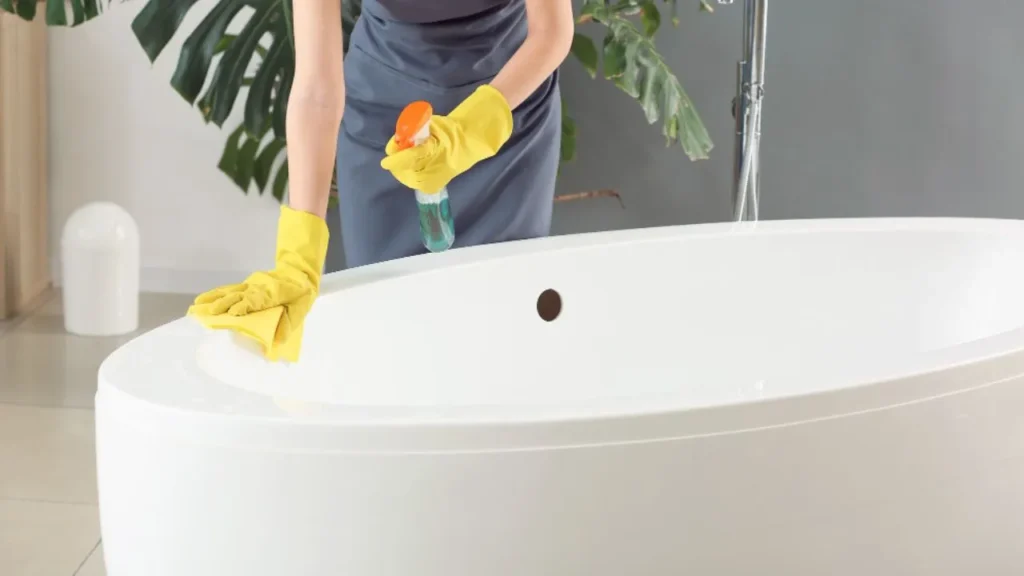
How Do I Get My Bathtub White Again?
To get a whiter bathtub again, determine whether it’s dirty or whether the surface itself has changed colour. A full dullness, yellowish cast across the whole bath is usually a build-up of body oils, product residue and hard-water film. A washing-up liquid soak removes the oily layer, while the limescale method clears the film underneath.
If the bath remains dull or yellow after a soak and a descale, then it means the surface has changed rather than got dirty. Older acrylic can yellow with age, and worn enamel loses its gloss, however often it’s cleaned. Stronger cleaners will only damage an aged surface further, so the real fix is a professional respray or re-enamel.
How Do You Get Black Mould Off Bath Sealant?
Surface mould on bath sealant usually comes off with a mould remover left on for the time specified on the label. If the mould has grown into the silicone and appears as a grey or black shadow that can’t be removed by wiping, it means the sealant needs replacing.
- Open a window or switch on the extractor fan, and wear gloves.
- Apply mould removal spray to the sealant area for the period indicated on the label. Many mould removal sprays include bleach; hence, do not use the sprays immediately after the vinegar or limescale remover.
- In case there are stains that are resistant, squeeze the kitchen roll soaked in the spray onto the sealant and hold it in place.
- Rinse well and dry off the sealant area using a cloth.
When the dark staining is not removed through the second application, remove the old sealant and apply new mould-resistant sealant. The pink slime around the edge is caused by bacteria that feed on soap remnants, not mould, and is easily wiped away. Drying the sealant after each shower and using the extractor fan will keep mould and pink slime away.
How Do You Clean a Really Dirty Bathtub Without Scrubbing?
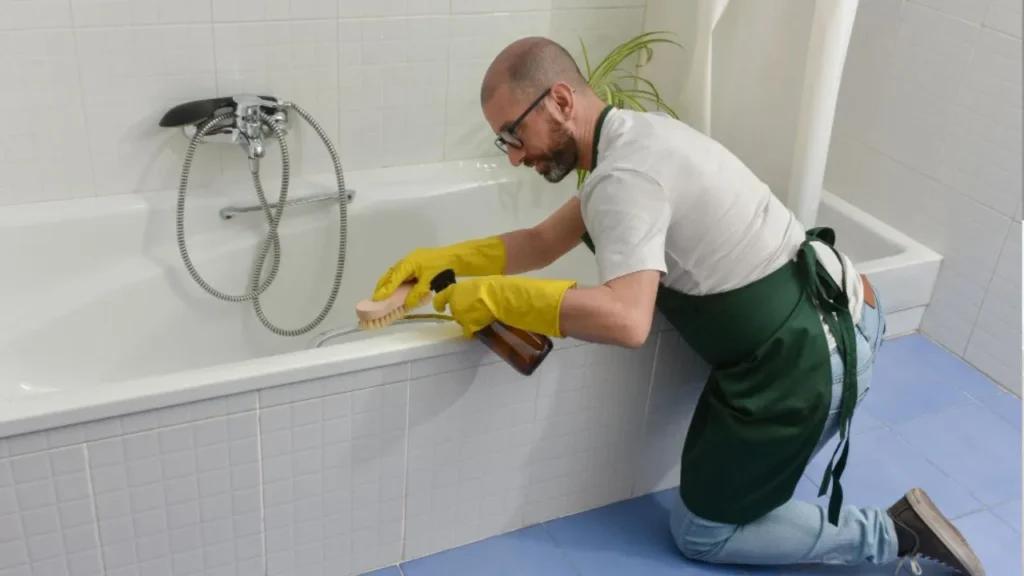
To clean a really dirty bathtub without scrubbing, soak it in hot water and washing-up liquid, then wipe the loosened grime away. You’ll still need a light wipe at the end, but no hard scrubbing.
- Place the plug into the bath and fill it with several centimetres of hot tap water.
- Add a generous squeeze of washing-up liquid and swirl it through.
- Leave the soak to work while you clean the rest of the bathroom, sweeping water up the sides using a sponge mop from time to time.
- Drain the bath, rub off the softened grime with a soft sponge, then rinse.
- Treat any limescale left underneath with the kitchen roll technique.
A bath neglected for months usually needs two or three soaks before it comes fully clean. If the bath came with a new rental, a professional deep clean is often quicker than repeated soaks.
Frequently Asked Questions
Diluted bleach is fine for many bathtubs, but you should read the care instructions from your manufacturer first. It can destroy the sprayed surface and some acrylic baths. Bleach doesn’t remove limescale; it just lightens the stains. Do not combine bleach with vinegar or limescale remover products.