

How to Clean a Bedroom Properly: A Deep Clean That Feels Like a Reset
We all know how much better it feels to settle down for the night in a clean, tidy bedroom. Crisp sheets, clear surfaces, not a speck of dust in sight: it just feels nice, doesn’t it? It’s a proper treat, and it makes it so much easier to switch off and get a good night’s kip.
But giving your bedroom a deep clean can feel like a right faff. The good news? You don’t need to shell out for a professional cleaner or lose your whole weekend to scrubbing. With a bit of elbow grease and a plan, you can get the whole room sorted yourself.
So, how to clean a bedroom properly? Our deep-cleaning checklist takes you through everything from clearing the clutter and freshening up your mattress to tackling dusty corners, windows and floors.
Just stick through it from start to finish, and you’ll have a bedroom that feels lovely, cosy and ready for your best night’s sleep yet.

How to Clean Your Bedroom and Make It Feel Fresh Again?
Right, time to roll up your sleeves! Having everything to hand makes the deep clean much easier. Take it one step at a time, and you’ll soon have a bedroom that feels like new.
Step 1: Get Your Cleaning Supplies Ready
Before you start the cleaning process, have these supplies ready. You won’t have to stop halfway through to hunt for a cloth or rummage around for cleaning products. Put on some music and let’s get started:
- Vacuum cleaner with attachments
- Microfibre cloths
- Duster and extendable duster
- Suitable surface cleaner
- Glass cleaner
- Laundry basket
- Bin bags
- Mop and appropriate floor cleaner
- Small brush for corners and window tracks
Quick tip: Open the windows before you start to get some fresh air circulating while you clean.
Step 2: Clear Away the Rubbish and Clutter
Start with the easy wins. Empty the bin, collect any rubbish lying around, and clear away cups, bottles or anything else that has no business being in the bedroom. Clearing the room first gives you much more space to tackle the proper cleaning. See if there’s any filled basket, food or drinks cans, dirty clothes on bed or floor and remove them.
Step 3: Remove Dust From Top to Bottom
Before you pull the bedding off, tackle the dust around the room. Dusting first stops it from settling on your mattress while you clean, so you’re not creating extra work for yourself later.
- Remove cobwebs from ceiling corners
- Dust light fittings and ceiling fans
- Wipe vents and high surfaces
- Dust shelves and the tops of wardrobes
- Work down towards lower surfaces
Step 4: Remove The Bedsheets and Start Laundry
Fresh, clean sheets are little mood-changers because they make the room feel cleaner and more inviting. So, get the old bedding off and into the wash while you carry on with the rest of your deep clean. Ideally, everyone must change their sheets once a week.
- Remove bedsheets and pillowcases
- Take off the duvet cover and mattress protector
- Check care labels before washing
- Start the laundry
- Set aside anything that needs air-drying
Step 5: Clean and Rotate the Mattress
With the bedding out of the way, the mattress can finally get some attention. Give the whole surface a thorough hoover, taking your time around the seams, edges and any little nooks where dust and fluff like to gather.
If the mattress is designed to be rotated, now is a good time to turn it around. Check its care instructions first, as not every mattress needs rotating. Once it’s done, leave it uncovered for a bit and let it air out before the fresh bedding goes back on.
Step 6: Clean Inside Drawers and Wardrobes
We tend to use drawers and wardrobes as places to hide things away, so we don’t notice the heaps of clutter building up inside. To make them breathable, take everything out of drawers and shelves at a time, so you don’t bury yourself under a mountain of clothes. Hoover the corners and edges, then go over the inside with a damp cloth and a little disinfectant. Let it dry completely before the contents go back.
Also, wonder whether you’ve worn or used each thing in the last year. That old shirt, random cable, or bag you haven’t used in years? You keep it anyway, just in case. The funny part is, “someday” rarely comes. If it’s in good nick and has no sentimental value for you, collect it in another bag for charity purposes.
Step 7: Clean the Windows, Mirrors and Blinds
Work from the top down and do the fabric first, so dust doesn’t fall onto glass you’ve just polished.
- Curtains and blinds: Heavy curtains and venetian blinds hold a surprising amount of dust. If your curtains can come down, check the care label and wash or dry-clean them as it says. If they can’t come down, go over them with your vacuum’s brush or upholstery attachment. Start on a gentle suction setting, particularly with delicate fabric.
- Sills and frames: Wipe these with warm soapy water and a microfibre cloth.
- Window tracks: Open the window and tackle the tracks and hidden crevices. Hoover out loose grit with a crevice tool, then scrub stubborn grime away with an old toothbrush and a little all-purpose cleaner. See a lot of damp on window glass? Here’s how to remove condensation from windows, so moisture doesn’t keep building up in the tracks.
- Glass can quickly show every little mark, especially in bright light. Give it a spray of glass cleaner and wipe it down with a microfibre cloth. Keep buffing until those annoying smears disappear and the surface looks clear and shiny.
Step 8: Clean Doors, Skirting Boards and Often-Missed Areas
These are the spots your eyes skip over, but your hands and the dust find them every day.
- Start with the skirting boards and door frames. They collect more dust than you’d expect, so give them a quick wipe, and don’t miss the sills or mouldings.
- Then come the light switches, which you touch every day without a second thought, so a wipe with a dry microfibre cloth makes a real difference.
- Door handles and switch plates are among the most-touched spots in the room, so go over them with disinfectant once a week. Spray the cloth rather than the switch itself, so liquid stays away from the electrics.
- Finally, look up at the light fittings. Dust can settle there unnoticed, so give them a gentle dusting or clean removable shades with warm soapy water. Switch the power off first.
Step 9: Vacuum the Bedroom, Rugs and Carpets
Now the clutter is out of the way, the floor gets its turn. Take your rugs outside on a dry day, give them a good shake, and roll them up for now.
Then comes the time for carpet cleaning. Under the bed lives fluff and grit, so spend most of your time cleaning there. Vacuum each corner of your room thoroughly, moving furniture if you need to. If the carpet smells a little stale, baking soda can help things freshen up. Just leave it for at least 15 minutes before hoovering.
If carpet stains are stubborn, they won’t budge through a vacuum cleaner, so professional carpet cleaning goes deeper if you need it.
Step 10: Mop the Floor
Once you’ve hoovered or swept, it’s time to mop the hard floors. Don’t skip the first step, or you’ll simply spread the dirt around.
Fill a bucket with warm water and add a cleaner that suits your flooring. Rinse the mop every few minutes to keep the dirty water from going back onto the floor. For wood, veneer or laminate, use two capfuls of Wood Floor Cleaner in 5 litres of water.
Feeling worn out already? Cleaning Services London offers one-off and regular home cleaning.
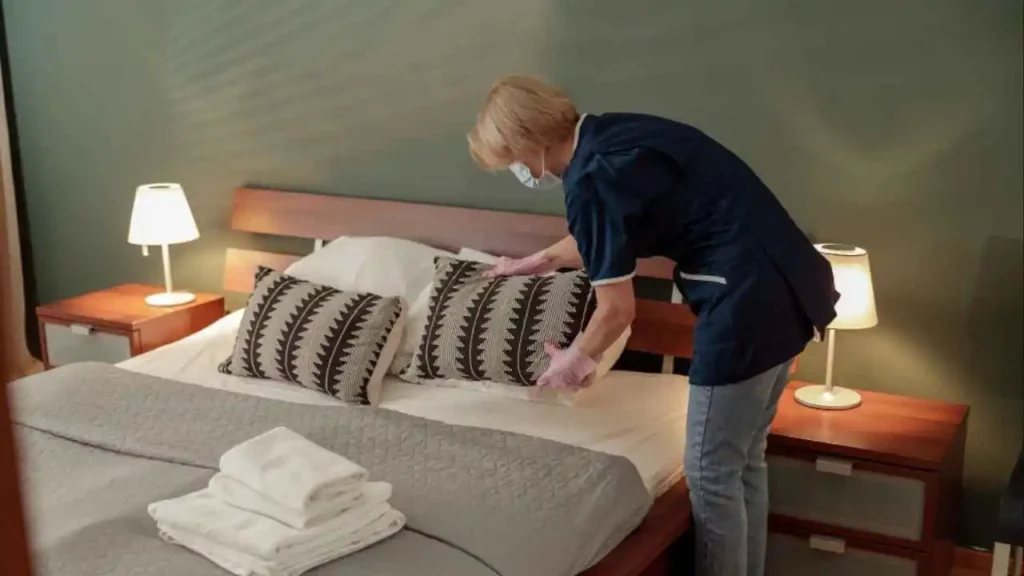
Step 11: Put Everything Back and Make the Bed
Check that the pillows are fully dry before they go back on the bed. Damp pillows can grow mould. Leave the mattress uncovered for a while with the window open, then dress the bed with your freshly washed sheets.
Pull the sheet taut and tuck it in, straighten the duvet, and set the pillows at the head of the bed. A made bed makes the whole room look finished.
Put things back with a lighter hand than before. A few favourite items on each surface look nicer than a crowded display, and bare surfaces are quicker to dust.

Your Final Bedroom Deep-Clean Checklist
Use this quick bedroom cleaning checklist to make your bedroom clean and tidy from each corner, giving it a fresh look.
Room decluttered
Laundry started
Bedding washed
Mattress cleaned
Pillows cleaned
Ceiling and high areas dusted
Surfaces wiped
Drawers and wardrobe cleaned
Windows and mirrors cleaned
Often-missed areas cleaned
Floor vacuumed
Floor mopped
Fresh bedding added
Everything put back
How Often Should You Deep Clean Your Bedroom?
There’s no single rule, because different jobs have different timelines:
| Task | How often |
| Sheets and bed linen | Weekly, or fortnightly at most |
| Hoovering, mopping, wiping surfaces and handles | Weekly |
| Pillows | Every 6 months, or every 3 if you get allergies |
| Mattress deep clean plus spot-cleaning spills | Every 6 to 12 months |
| Rotating or flipping a double-sided mattress | Monthly, alternating a 180° turn and a flip |
Conclusion
So, that’s how to clean a bedroom properly, from the first bin bag to the last tuck of the duvet. It looks like a big job on paper, but split into small stages it’s a lot less painful than it sounds. Once it’s done, the weekly wipe-downs and a quick hoover will stop it all building up again. Bedroom sorted? The lounge is next, so here’s how to clean a living room.
Frequently Asked Questions
It depends on the size of the room and how much clutter there is. Start the washing first, because linen needs time to wash and dry while you work through everything else.